

Communications and Technology Blog with the latest news in the IP communications, telecom, VoIP, call center and CRM space, with plenty of opinion & analysis...
Skype is certainly a major symbol for the IP communications market and although it plays in a niche in the market - consumer VoIP/Video, it is now a household name and having it entangled in legal limbo does it or the industry no good. You may remember that the company was in the process of possibly going IPO and then eBay decided to sell it. But there was a sticking point consisting of Skype's p2p technology not being theirs and the original founders, Janus Friis and Niklas Zennström playing hardball to cease Skype from working until they got paid what they believe they were owed.
Thankfully the companies settled and as a result eBay announced that the investor group led by Silver Lake, which had previously entered into a definitive agreement to acquire a majority stake in Skype from the company, has reached a settlement agreement with Joltid Limited and Joost N.V. that gives Skype ownership over all software previously licensed from Joltid and ends all litigation currently pending against the investor group and eBay at the closing of the acquisition.
As part of the settlement agreement, Joltid and Skype founders Niklas Zennström and Janus Friis will join the investor group, contributing Joltid software and making a significant capital investment in exchange for a 14 percent stake in Skype. As a result, Silver Lake and other investors including Andreessen Horowitz and the Canada Pension Plan Investment Board (CPPIB), will together hold 56 percent of Skype and eBay will retain 30 percent. As previously announced, eBay will receive approximately $1.9 billion in cash upon the completion of the sale and a note from the buyer in the principal amount of $125 million. The deal, which values Skype at $2.75 billion and is expected to close in the fourth quarter of 2009.
I agree with Skype investor and Netscape founder and Ning co-founder Marc Andresen that Skype is one of the most important companies on the Internet.
Now let's see what they can do with this company which has massive potential to keep changing communications and highlighting how IP can disrupt an industry and shake it to its core. One area of exploration will hopefully be deep integration between Ning and Skype allowing the social network building service to leverage real-time communications more effectively. How much stickier will online communities be when participants can see each other and speak immediately. Does a Ning/Skype combination become the largest real-time directory in the world?
Now I really can't wait to hear Skype's Chief Strategy Officer Christopher Dean speak in a few months at ITEXPO in Miami.
Today is a big Twitter day for me. You may or may not realize that my Twitter feed is automated meaning my blog posts just convert over to Twitter posts. I have set up my account to get an email whenever a new person follows me. At a certain point the follows were becoming a distraction so I have a rule which forwards all Twitter follows into a folder which I go through when I have a moment. Today is that day and I will likely look at 50 of them or so.
The reason I look at all my followers is that many of the people following me work for companies which may make for good stories, people to invite to speak at an event, etc.
To me, Twitter is just another channel for my blog to live on - like RSS, Facebook, LinkedIn, etc. I have a number of people who would rather follow me in this manner - and that works for me.
We are thrilled to announce a slew of top notch keynoters for the upcoming ITEXPO which takes place in Miami, FL Jan 20-22, 2010. I will share them with you by first explaining why they were invited:
A keynote picture from ITEXPO East 2009 in Miami
Open Source
One of the biggest trends in tech this last decade has been open source and while you may not know this, I was a UNIX (the Linux precursor) system admin at TMC back in 1982 or so and I am a big fan of this OS which is reliable, stable and the strong basis for cost-effective solutions in a number of fields. Without a doubt, Asterisk is the major force in the open-source communications space and as such, Digium's CEO Danny Windham (the company behind Asterisk) was the perfect choice to address the audience of businesses, carriers and resellers. By the way, Digium Asterisk World (DAW) is collocated at this show and I hear it just sold out of exhibit spaces and my team is looking for ways to get the waiting list of companies into an expanded DAW pavilion on the exhibit hall floor.
Digium Asterisk World Photos from ITEXPO East 2009 this year
Google Voice has been one of the most disruptive influences in telecom these past years and this service has single-handedly become a point of public argument between the search leader and Apple and AT&T - with the FCC acting as referee of sorts. The argument revolves around net neutrality - the concept that carriers will apply discrimination to traffic on their networks based upon traffic, application type or source. Google obviously wants their services to run on any network in an unencumbered fashion while AT&T has said since 1995 when they were SBC that they want to charge for their pipes. AT&T actually then pointed out to the FCC that Google Voice does not terminate all calls on its free Google Voice service meaning it is not adhering to the principles of net neutrality. The reason of course as Google points out is traffic pumping and bizarre intercarrier compensation rules which allow some rural carriers to charge exorbitant rates for calls terminating in their areas. Craig Walker founded Grand Central, the company purchased by Google and the basis for Google Voice and as the Group Product Manager for the Real Time Communications Group at Google, he was a natural person to invite to speak with us at the show. It seems his accomplishments have unleashed a firestorm of controversy which should hopefully clean up some of the ugly mess that is telecom policy and regulation.
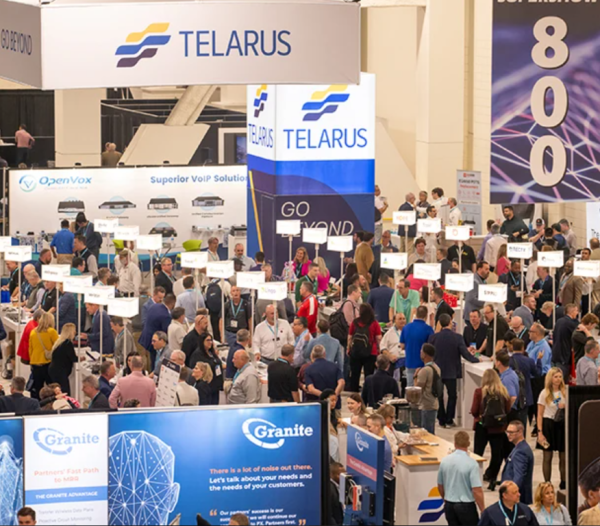
Exhibit hall pictures from ITEXPO East 2009 in Miami
HD Voice/SIP and Video
Another major trend in our markets is that of HD voice, video adoption and of course SIP endpoints. AT ITEXPO last year, we had the first panel in the world focusing on HD voice (video) and since then I am excited to see other conference organizers throwing their hat in the HD ring. A major player in all of the above spaces is Polycom and they have done an amazing job of working with disparate vendors on interoperability issues which has moved the market forward by reducing the friction caused by proprietary endpoints. In the world of video, the company has been a major player - developing telepresence systems all the way down to video phones. To get a bead on where this market is heading we invited Polycom Co-Founder, and the CTO of the Voice Communications Group Jeff Rodman to join us as a keynoter.
HD Voice Panel I moderated from ITEXPO East 2009 in Miami
Skype
No matter how you break out the IP communications market, Skype is likely a factor in changing the market in a pro-consumer manner. By giving away global voice calling with quality which far exceeds the PSTN, they have disrupted while getting users used to better voice quality. On top of that, they give away video calling as well, making them a company which excites consumers and scares carriers and anyone else who dares compete with their network of hundreds of millions of subscribers.
Interview I had with Skype's Ian Robin
Skype has been making a major push into the enterprise and is working on enhancing relationships with carriers as well. They are even looking for channel partners who can share in the newly created revenue streams from a number of products like Skye for SIP. When you take all of this into account, it does make great sense to invite Skype Chief Strategy Officer Christopher Dean to speak, doesn't it?
Smartphones, Wireless and Smart Ecosystems
One of the biggest trends in the world of communications is smart devices and ecosystems. What is an ecosystem you ask? Well it is a group of companies who develop products which work with a product or service offered by a host company or companies. The iTunes App Store may be the best example but certainly Avaya's DevConnect or Cisco's Partner Programs are good examples as well. You may know that TMC has focused a tremendous amount of resources on educating the world on smart ecosystems via our new SPEC site. I truly believe ecosystems have a bright future.
In order to bring attendees up to speed on all these topics we invited two top keynoters to present on the matter. Sprint's Mathew Oommen is the vice president of device and technology development at the company and uniquely positioned to share with us his company's view on the future of wireless technology. Oh and by the way, be sure to check out my recent interview with Sprint's Wayne Ward who heads up the company's M2M activities (did I mention there is a collocated M2M conference at ITEXPO?).
To get a handle on wireless devices as they pertain to ecosystems we invited Brian Higgins the Executive Director for Ecosystem Development within Verizon Wireless to join us so we can learn where the company thinks the market is headed. Verizon has been very ambitious in its goal to develop an ecosystem of products and applications which interoperate in the hope of one-upping the iTunes App Store.
We continue to work to add fantastic new speakers to our roster and you can expect this ITEXPO to be the most comprehensive and educational ever and a must-attend. I personally hope to see you there.
Oh and by the way, we have secured great rates this year at the Loews Miami Beach Hotel - you can save $150/night if you book now - the rate is $249 vs. what is typically a $399 rate at prime season. There are many advantages to staying at the show hotel such as networking, etc - and I have always been a fan of the Loews. In fact I was a guest the first day the hotel opened about ten years ago or so.
Rich Tehrani tweeted, "Skype Lawsuit Settled, Skype/Ning Integration Has Huge Potential: Skype is certainly a major symbol for the IP commu... http://bit.ly/18DxTA"
Rich Tehrani tweeted, "Cleaning Up my Twitter Follows: Today is a big Twitter day for me. You may or may not realize that my Twitter feed i... http://bit.ly/3B6nTA"
Rich Tehrani tweeted, "ITEXPO Keynoters Announced: We are thrilled to announce a slew of top notch keynoters for the upcoming ITEXPO w.. http://bit.ly/3W914q"
Rich Tehrani tweeted, "Verizon Termination Fee Increase Necessary: I just came across an article by Glenn Hall on the TheStreet.com wh.. http://bit.ly/1fpYRz"
Rich Tehrani tweeted, "WiFi on Delta: Check it out... There is WiFi on my flight. Who knew? Delta even. This is great news. To paraphr.. http://bit.ly/yYSGe"
I just came across an article by Glenn Hall on the TheStreet.com which details outrage at the fact that Verizon charges $350 for their early termination fee - essentially this fee just doubled. His point is that as devices get more and more powerful and device envy increases, we should encourage upgrades. And his point makes good sense.
The challenge for Verizon Wireless is the incredible amount of money they have spent on their network. Having just come back from a trip to Huntsville, Al I can tell you that once again, Verizon proves it has the fastest network and the network which is the most reliable in more places.
I know because I carry a Verizon MiFi device as well as have another Verizon radio embedded into my laptop and I also carry an iPhone. AT&T has a poor network. It is getting better but it is poor and 3G just doesn't exist in many places I travel to. Not so with EVDO from Verizon, it is almost everywhere I go and is almost always blazing fast. Many times it is faster than a local WiFi hotspot which charges $10-$12 per day!
At the end of the day, consumers who want the best network have to pay for it. You can't get something for nothing. The fact that we are able to go into a Verizon store and purchase a $650 phone for $199 and then expect to upgrade it for free a short while later is nuts. Verizon spends billions on its network and I for one want them to continue spending because the productivity of the nation and my company increases in lockstep.
By the way, this leads me to an interesting point you may be interested in, for wireless broadband use, TMC has standardized on Verizon but for devices, we have standardized on the iPhone. One of the things I hear most often when I travel to telecom and tech events is, "If the iPhone was offered on Verizon Wireless, I would get one." The reason of course is the network. Unless you happen to only go to the relatively few places where AT&T has a strong 3G network, you likely would benefit from this great network and again, you can't get something for nothing. One last point -- if you are a Verizon Wireless customer, you want them to continue improving the best network in the US.
Check it out... There is WiFi on my flight. Who knew? Delta even. This
is great news. To paraphrase a surgeon who removed a bullet from
Reagan's chest; today sir, we are all Delta lovers.
I am thrilled that a past ITEXPO keynoter Carly Fiorina will be running for the California Senate. Carly is a charming, personable and knowledgeable thought leader who gave a captivating address to a standing-room only crown in Los Angeles a few years back. Fiorina was a major executive at both Lucent and HP where she was CEO. It is my humble opinion that having a candidate who understands telecom and technology will benefit this great country of ours if for no other reason than she will be in a position to really understand the issues.
This is more important than you may first realize. Without pointing anyone out in particular, it is apparent that politicians don't have a clue about net neutrality and these are the people who set rules for the US which will likely be duplicated worldwide. In addition, Fiorina will understand and appreciate the brain drain which is taking place in the US and how this hurts us. Why? Well we bring the smartest people from around the globe to our universities and allow them to get the world's greatest education. We then chase them away and force them to start new companies in other countries and in the process we lose hundreds of thousands if not millions of valuable jobs.
Perhaps most importantly, Fiorina is a political candidate who has run something. She has hired. She has fired; she has faced competition from Asia and other parts of the world firsthand. She knows what to do to make the US a more competitive place and this means more jobs for our ailing economy.
This is not theoretical knowledge - she learned by doing.
I believe we need to stop electing candidates who have little to no experience running companies. How is it these people who have never run anything are in a position to dictate to the private sector how to run companies? Do they have more experience than a random college graduate? No. And that is why our country is in trouble today. We need more government officials who care about the country and do what is best for it. I am not talking about doing what the special interest groups with the most money dictate, I mean doing what is good for the people that elected them.
We will see how this plays out but I for one am all for electing politicians who understand business and have run successful companies.
I got a tip that Adtran was acquiring Objectworld. My take? Objectworld is a company with great UC technology and no brand recognition. Adtran is a company with a product line similar to Cisco but much smaller. Still, with a market cap of over $1.4 billion, Objectworld can really get a boost from Adtran's access to capital, infrastructure, reseller network, carrier relationships and improved branding.
Here is a link to a cached page mentioning the acquisition. Keep it tuned to TMCnet and my blog for more.
This is my first time in the Huntsville airport and apparently AT&T 3G
will not be joining me at the moment. I never thought I would be
thankful for the Edge network.
Tonight I am at an Adtran dinner/reception and going over my
PowerPoint slides for my presentation tomorrow.
Today I am headed to Huntsville, AL where I will be giving a presentation on the state of the industry to Adtran customers and I am really excited to be meeting with a number of carrier representatives and resellers at the event. Typically to get from New York to Huntsville I drive from Nashville, TN which a direct flight from New York but a 131+ miles away. Today I am connecting via Detroit directly to Huntsville - I am a bit surprised that there is such a direct flight when there isn't one from NY to Huntsville but then again I know there are auto plants in Tennessee which could explain why there are flights from Detroit.
Anyway, I was reminded of the importance of face to face communications as I saw this video interview of Scott Kargman by Suzanne Bowen. Suzanne works for DIDX, a company supplying DIDs to carriers worldwide. Scott runs Crossfire Media, a TMC partner in our M2M, 4G and Smart Products initiatives or SPEC. Check out the interview which took place at Supercomm 2009 in Chicago.
At Supercomm 2009 in Chicago I had a chance to speak with MRV Communications a leader in the carrier Ethernet market boasting among other things, access solutions for 10/100 GE, 10GE, SyncE, 1588, SHDSL and fiber which share a common OS and management interface. The 20-year old company was an early innovator in the field of lasers and now employs more than 4,000 engineers, has 6 R&D divisions and $538 million in revenue coming from a broad range of connectivity products primarily targeted at carriers and campus networks.
A common theme at the show was backhaul solutions and MRV too is looking to help carriers as they transition to 4G networks and more importantly the company like others in the market is helping service providers leverage packet-based technologies while giving up little the more expensive and proprietary circuit switched world has to offer.
Case in point is the company's new synchronization over packet addition to its Optiswitch 900 product line. The goal of this entry is to facilitate the migration to 4G/LTE in mobile backhaul networks. Specifically the environmentally hardened (allows it to be installed almost anywhere) 904-MBH is a compact carrier Ethernet demarcation device supporting IEEE 1588v2 and synchronous Ethernet.
Company execs explained that they didn't want to have two separate boxes and this new device is the first to to enable synchronization-gateway functionality between synchronous and asynchronous physical layer networks for both 3G and 4G networks.
In addition, this device supports traffic management for enhanced QoS meaning carriers can ensure timing packets have ultimate priority over other packets.
The company also announced its new LambdaDriver IP switching module (OPN 800/1600) for migration to packet optical transport networks. These new carrier Ethernet aggregation switches have 8 GbE ports for access to XFP-based ports for backbone network connections. The products tie into the GMPLS control plane and allow MPLS enforcement and are tunable as well.
The company has put a big focus on SLA assurance and their new OAM techniques are embodied in their new network provisioning ands management software. Among other things this new solution hopes to squeeze fault isolation to minutes instead of hours in order to facilitate more rapid truckrolls. The GUI-based Pro-Vision software platform is touted as an easy-to-use tool allowing central management. In addition, it is designed to allow quicker time to revenue for carriers through its use of pre-defined individual service platforms.
A constant theme recently has been using Ethernet in carrier networks whenever and wherever possible. Logically this is what has to be done as the cost per bit is continuing to decline and margins are being eternally squeezed. Lowering the cost of network infrastructure is the best way to combat this trend. MRV has a suite of solutions they have been successfully selling in the space and they hope to continue in their pursuit to provide more and more strategic solutions to carriers worldwide as they transition to next generation networks.
Bill Gurley writes correctly that Google is positioned to take over the world. I am certainly paraphrasing and adding some personal bias - he describes in detail how the company invested great sums of money to assemble a superior turn-by-turn GPS database which includes a street view and in so doing is now able to take marketshare from competing mapping vendors by using advertising to subsidize the cost of acquiring this information.
Advertising revenue in fact will drive the company's operating system, software as a service and just about everything else.
As the company shares part of this revenue with partners you have seen wide adoption of Android by wireless carriers and no doubt hardware vendors installing the Google Chrome OS are next.
Expect the company to continue going after Microsoft products - by giving services away and supporting them through ads.
Any competitor which has an inferior ad network and generates less money from advertising (this is all of them) is pretty much domed.
The only way to stop the onslaught is to build a far superior search engine and hope the world switches. At this point the sheer marketshare Google commands in search allows them to utilize their massive database of user behavior as a massive focus group allowing them to improve by the second.
I just can't see anything stopping this company besides, a scandal, high level departure, illness or something similar. Even then, the company is a monopoly at this point and perhaps momentum will ensure their future success.
Is the company using its power in a way which warrants them being broken up by the DOJ? Possibly, but Google reminds me a heck of a lot of Wal-Mart as the larger it gets, the better consumers do. Giving away free GPS for example is a pro-consumer behavior and as long as the company keeps breaking into new markets and giving things away, it is tough to see how the Google could be considered to be harming customers.
Getting back to the headline of this article -- do I really think Microsoft is doomed? Yes. Immediately? Obviously not. But any time a company with a quality name in the market can make money while giving away good products which you charge for, you are done.
Carrier Ethernet ring network standard allows potential SONET/SDH replacement at as little as 1/10th the cost
As smartphones and netbooks proliferate and drive more wireless data traffic, the need for better backhaul solutions only grows. In fact this week the new Verizon/Motorola Droid will be released with a new version of Google Maps which includes free turn-by-turn navigation. Expect it to be a single application which is called out as a bandwidth hog in the future.
One company looking to help provide carriers with less expensive and more reliable solutions which support this massive bandwidth growth is Actus Networks. Recently at Supercomm I had a chance to speak with company execs about their ITU-T G.8032 and G.8032 2010 compliant ring protection products which bring many of the benefits of SONET/SDH to the world of carrier Ethernet.
In addition, Actus has equipment which allows carriers with circuit switched networks to use their equipment to access both their legacy and new Ethernet networks. As carriers move to IP-based 4G/LTE networks they will have to explore using IP in their backhaul applications as well and this is where the Korean-based company comes in.
The current product offering consists of a NEBS level 3 compliant, 16-port, 1U G200 carrier Ethernet access device which supports QoS, PBB-TE, OAM, ring protection, E-Line service and circuit emulation (discussed above) as well as the G300 Carrier Ethernet Access Platform.
To learn more, you can read this article, view a recent press release and/or watch a video interview (get popcorn )I had recently with Kevin Rhee CSO and Peter Cho CEO/President.
Bandwidth Tsunami, have you heard of it? I received an email which said this recently from a close relative. Heard of it I answered, sure - telepresence, YouTube, video conferencing HD video streaming, p2p sharing networks, 3D TV, yep, one of the brightest spots in tech is finding ways to monetize this trend. The Backhaul market is just one example. It is apparent that this trend is not going to slow down anytime soon and equipment providers are tripping over each other to provide solutions which in turn deliver more bandwidth. Even companies supplying chemical coatings for fiber optic cables are optimizing their products to serve the insatiable global bandwidth appetite.
One company, DSM Desotech, a leading supplier of UV-curable optical fiber coatings has even focused on ensuring the frequencies which transmit video are optimized on optical cables which carry their coatings. Wondering what UV curing is? Well I am glad you asked. You see, my father started TMC back in 1972 as he saw an opportunity to educate the world on chemical coatings by launching the first magazines in the world in this space. You see there was an energy crisis and the world was switching from coatings which were cured (dryed) in huge money-wasting heat ovens to coatings which contained chemicals which would react to ultra violet light and dry rapidly without the need for wasted heat. TMC was likely the first publisher in the green technology space.
In 1982 he launched the first magazine in the world on the contact center and from there the company gradually shifted to communications and technology and we left our chemistry roots behind as we grew to be the world's leading media company focusing on communications and technology.
So it was with fond memories I got to discuss how DSM Desotech has a UV coating they call DesoLite which maximizes signal reliability and performance from -60 degrees to 85 degrees Celsius.
Of special importance is the coating's resistance to microbending which is best described as random bends in the cable which cause small deformations in the cable axis which results in signal degradation. Microbending can take place when there is a non-uniform external force on a cable such as fiber being forced on cabling materials or pressed on a rough surface.
Some of the benefits of DesoLite are power and money savings associated with purchasing less repeaters as well as decreased repair costs.
To further the market, DSM Desotech recently partnered with Telcordia to drive standardization for the characterization of microbending performance in optical fiber and cable products. Some of my contacts in the optical industry think this is a smart move as it allows the company to effectively combat competition from Asian manufacturers. I tend to agree.
To learn more, watch this video which contains an interview with Robert Crowell, VP of Fiber Optic Materials and Steven Schmid, Research and Development Director, Fiber Optic Materials.
Recent Comments